



For Stu Jackson, there are few mountains left to climb in the basketball world
It would that seem that at this point Stu Jackson has crossed nearly everything off his basketball bucket list.
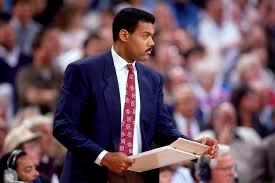
He set the career scoring record at Reading High, then went on to play and coach at the highest level of the college game . . . He was one of the youngest head coaches in NBA history, with the New York Knicks . . . Was a president, general manager and head coach of the Vancouver Grizzlies. . . Twice worked as an executive in the NBA front office and now serves in a similar capacity with the Big East Conference. . . He even spent time as a broadcaster with TBS.
You’d think there aren’t many more basketball experiences left for the 66-year-old Jackson, but he has his eye on another.
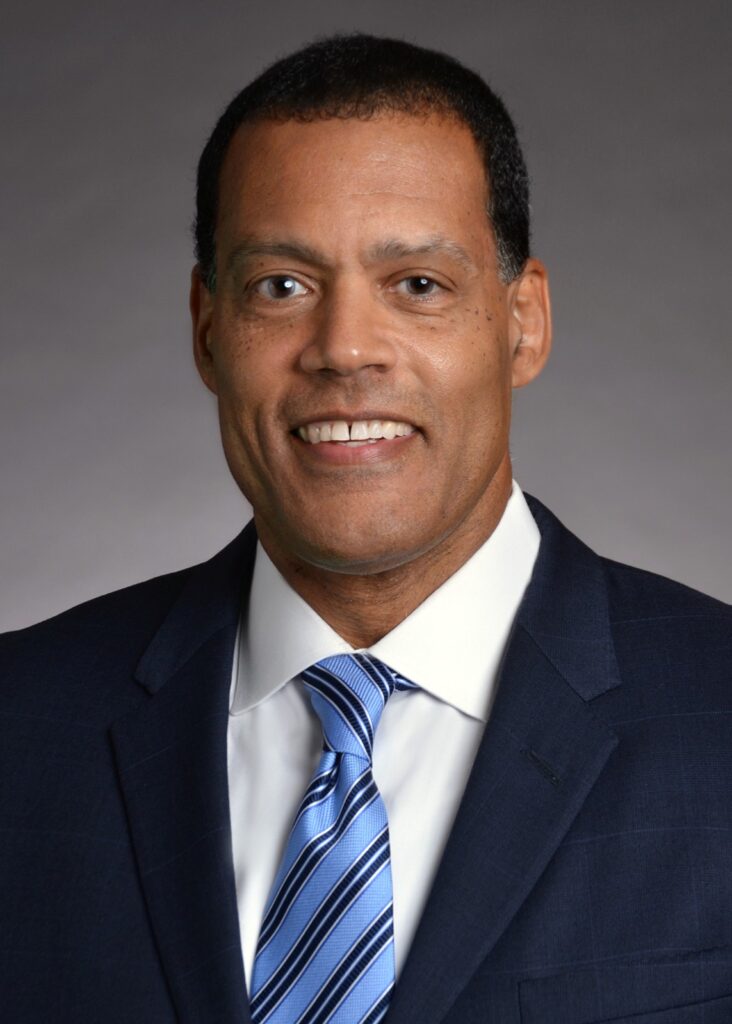
Would you believe high school coach?
“Of all the positions I’ve held, I enjoy coaching the most,” said the 1973 Reading High grad, “developing relationships with players and helping them grow. Coaching provides you the most intimate connection with which to do that.”
No better place to do that, Jackson figures, than at the high school or perhaps junior college level.
He has performed enough under the bright lights over the last 50 years. He’s not looking for more attention.
He plans to seek work closer to the ground, where he can put a treasure chest’s worth of hoops experience to use affecting the lives of young people.
Rick Perez, the Red Knights’ current coach, needn’t worry about job security: Jackson isn’t looking to land at the Geigle to start a new chapter in his career. He plans to retire somewhere warmer and find a low-key re-entry to the game.
“Wherever I decide to settle, I’ll look around and see if there’s an opening and put in my application,” he said.
Jackson returns to town Monday when he will appear with former Red Knights great Lonnie Walker V to speak at a Reading Education Foundation fund-raiser at RACC’s Miller Center. Jackson will be back in Reading in October when he is inducted into the Pennsylvania Sports Hall of Fame.
Jackson knows that retired or not he can’t keep his distance from basketball for long. He’s been in love with the game since he began going to Northwest Middle School to see the Red Knights play. He was about 7 when he first saw the great Bill Jankans. He’s been hooked since.
“That sent me over the top,” Jackson said of watching Jankans, who led the Red Knights to a district title and 25 straight wins to open the 1965-66 season. “I remember feeling the electricity and enthusiasm from everybody in the community coming to see Bill and that team play.
“My dad (Harold) took me to the Farm Show to see Reading play, with (coach) Pete Carril. I began to understand what a rich history Reading High School basketball had (and) that Reading basketball was pretty cool.”
Jackson helped forge the legendary status the program holds to this day. He was 6-6 powerhouse who in his three seasons led the Red Knights to 72 wins, a pair of District 3 championships and to the 1973 PIAA championship game.
He packed gyms wherever he and the Red Knights went, much as Marshall and Walker IV would generations later.
Jackson set a tournament record by scoring 38 points in the state final against General Braddock, a mark that wasn’t topped until Carlisle’s Billy Owens dropped 53 on Pittsburgh Central Catholic 20 years later.
The All-State pick finished with a program-record 1,563 points, a mark that wasn’t topped until Marshall came around 25 years later.
Many who saw Jackson play still contend he’s the best ever at the school, Jankans, Marshall and Walker IV notwithstanding.
Jackson went on to play three seasons at Oregon; then, after a devastating knee injury, he returned to complete his career and his degree in business at the University of Seattle.
He landed a big job with IBM in Los Angeles and was wildly successful but after a couple years basketball came calling again.
Former Oregon assistant Jim O’Brien — who went on to become Philadelphia 76ers head coach — coaxed him back into the game as an assistant coach at Oregon.
Two years later he moved on to coach at Washington State, then got introduced to a 33-year-old Rick Pitino, who was putting together his first staff at Providence. Pitino was impressed with Jackson’s intellect and understanding of the game and offered him a job.
Jackson’s stint with Pitino — two seasons as an assistant at Providence, and two more with the Knicks — raised his basketball profile and provided a gateway for bigger things to come in the NBA. Jackson treasures those years under Pitino’s wing; it shaped him as a coach.
“Rick is one of the smartest people I’ve ever been around, in any profession,” he said. “He taught me the game, how to run a basketball program, and how to coach.”
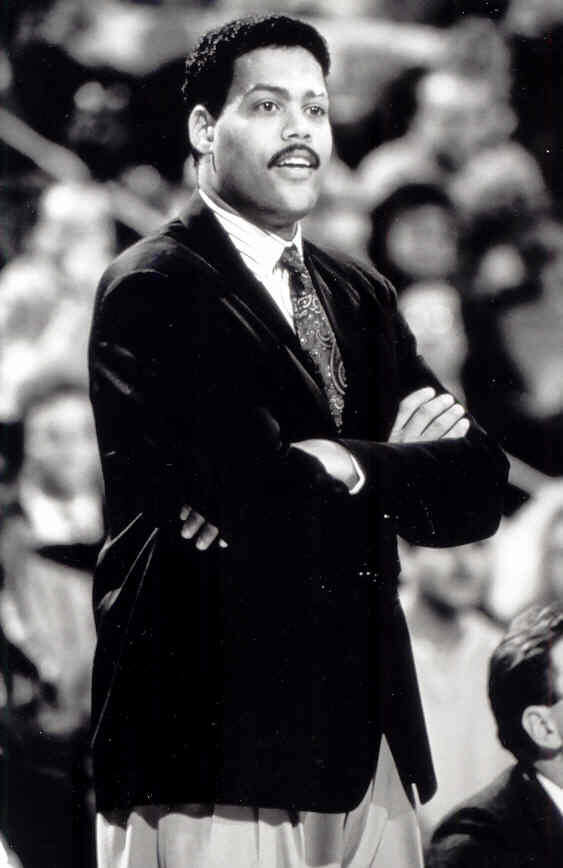
Jackson succeeded Pitino as Knicks coach and, at age 33, went 45-37 in 1989-90 with a first-round playoff win over the Boston Celtics. He was dismissed a month into his second season after a 7-8 start.
Of all his basketball stops Jackson cherishes his two seasons as head coach at Wisconsin most.
His closest advisers told him not to take the job; it’ll bury you, they warned. He didn’t listen.
He picked up a great vibe from the administration — president Donna Shalala and athletic director Pat Richter — and felt he had the support of the new football coach, Barry Alvarez. He thought he could turn around a program with zero basketball pedigree.
“The only banners that hung in the old field house were boxing banners from the 1930s,” Jackson said.
In his second season, 1993-94, the Badgers qualified for the NCAA Tournament for the first time in 47 years and won their opening-round game. They’ve been back to the tournament almost every year since.
“What we accomplished there was something that everyone involved took a lot of pride in,” Jackson said, “completely turning a basketball program around from being a bad one to a respectable one and collectively changing the culture of the team.”
That successful run sparked interest in the program; four years later the 17,000-seat Kohl Center was built and Wisconsin soon became a basketball destination.
Much as he enjoyed instant success with the Badgers Jackson could not pass on the opportunity to become president and general manager of the expansion Vancouver Grizzlies in 1994.
“I’ve always been a glutton for a challenge, and that was a challenge at the highest level,” he said. “The lure of the NBA got me once again.”
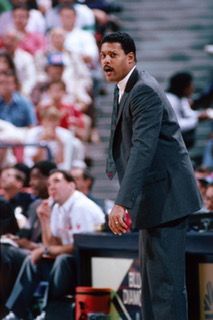
Jackson spent 15 years working for the NBA, first as the league’s Director Basketball Operations, then, from 2000-2013, as its Executive Vice President. He was the No. 3 man in the league office, behind David Stern and Adam Silver.
He was in charge of international operations, game rules, conduct and discipline. While Stern remained above the fray it was up to Jackson to do the dirty work when it came to doling out suspensions and fines.
He was taught at an early age to respect the game and became a stickler for playing it the right way; he wanted to make sure the best players in the world did, too.
“I didn’t enjoy taking players’ money,” he said, “(but) I understood the need for protecting player safety and protecting the brand of the NBA. Fining and suspending players was an unfortunate byproduct (of that).”
In his current role as associate commissioner of men’s basketball in the Big East he’s involved in scheduling, which can often draw the ire of coaches. No matter; he enjoys that, just as he has all of his basketball jobs.
“Each of them was a learning experience and have all contributed to my professional journey that’s still going,” he said. “I learned something in each of the roles.”