



Outgoing D3 chair Doug Bohannon voices concerns about charters, home-schoolers and other PIAA issues

District 3 and the PIAA are taking a big hit next month when Doug Bohannon retires as athletic director at Elco.
Bohannon has been a steadying force and voice of reason on the PIAA Board of Directors and the District 3 Committee for many years, stressing fairness over the letter of the law (as written in the Pennsylvania Interscholastic Athletic Association constitution).
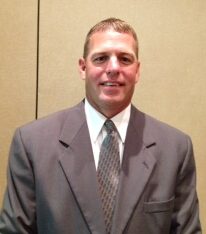
He played football, basketball and ran track at Elco, graduating in 1984, and has taught at his alma mater for 32 years. He coached football, basketball and track at the school and has been its athletic director for 25 years.
Bohannon, 55, has been a member of the District 3 Committee for 21 years, on the PIAA Board for 10 years and served as President of the Lancaster-Lebanon League for three years. He has been the District 3 chairman for the past three years.
He played an instrumental role in helping Wyomissing, slated to move up to Class 4A in football due to the Success Formula, win its appeal.
Here are his thoughts on the state of high school sports as he departs.
MikeDragoSports: As a way to curb athletically motivated transfers the PIAA enacted its Success Formula several years ago, moving teams up one classification if they were successful in the playoffs and had three or more transfers (in football). Wyomissing, Aliquippa and several other school successfully appealed the rule earlier this year, pointing out problems as the rule as written. Now, PIAA is moving to take away the transfer part of that formula. Why?
Bohannon: The formula was set up so that if you were successful and had a certain number of transfers, those components would push you to a higher classification. But the way the (rule) was written at the time (was problematic). It’s so difficult to explain to people what is a transfer. The PIAA would say a transfer’s a transfer. But people get frustrated when they have a transfer who doesn’t play (but causes the team to move up). So, there’s too many variables that come into play (with) that transfer (rule).
MikeDragoSports: At least one of Wyomissing’s three transfers was clearly not athletically-motivated; the student-athlete in question wasn’t able to compete at that level but was allowed to be part of the team because it helped him socially and emotionally.
Bohannon: Wyomissing wasn’t successful (last season) because of that transfer; he didn’t help them become better. That’s why I pushed (for granting the appeal).
MikeDragoSports: But by removing the transfer element, won’t that take away the teeth of the rule?
Bohannon: I can live with the Success Formula if they pass it (in this form).
MikeDragoSports: With the Succcess Formula softened, what more can PIAA do to curb athletically-motivated transfers?
Bohannon: I think we have fixed it. The best rule PIAA put in was the postseason (ban, when the student-athlete is ineligible to compete in that sport for one season if the transfer occurred during his/her sophomore year, or later). I think that has really (seen) a lot of people tap the brakes. When they realize they can’t play in the postseason that sort of (slows them) a little bit. That’s the best rule we have.
The 21-day (sit-out after an in-season transfer) has helped as well; a kid can’t say, ‘(Our team) is done, so I’m going to go over to School B.’ Our transfer rules have been strengthened. I don’t think there’s a perfect solution, but those have really, really helped.
MikeDragoSports: Is there more PIAA can do to prevent athletically-motivated transfers?
Bohannon: You could go back to the old college rule where you sit out the whole year. I don’t think you’d have a consensus for that (on the Board), and I’m not saying I’m for that, either.
MikeDragoSports: Do you have any data to indicate how the number of transfers has lessened since these rules came into effect?
Bohannon: No, but we hear a lot of rumblings that students are going to transfer and then they realize if they transfer they’re not going to be able to play in the postseason. Once people become educated (about the rule) we curtail quite a few transfers. You don’t see as many (now). (Everyone) thinks they’re going to beat the system . . . the system’s pretty darned hard to beat.
MikeDragoSports: More than a decade ago you proposed the ‘Bohannon Plan,’ which would have dramatically reclassified PIAA schools along ‘boundary’ and ‘non-boundary’ lines. That would have seen a number of Catholic, private and charter schools bumped up a classification or more and a like number of public schools bumped down. I thought it was a great, and simple, solution, but the PIAA never acted on it. In fact, when it came to a vote several members of the Board of Directors conveniently stepped out of the room because they didn’t want to weigh in. What was the genesis of that plan?
Bohannon: I got the credit for it, but it wasn’t really my idea. A good buddy of mine, Lyndon Engle (who now teaches and coaches at Cocalico) gave me the idea. (It didn’t pass because) there was legislation and politics involved. If you look at the boundary/non-boundary (issue), it’s not as easy as you think (to sort out) because there’s four different classes (of schools): public, Catholic, private and charter. There’s a big descrepency between all four, that’s why it’s not that easy when you say, ‘Let’s go public/private.’ It is not an easy fix.
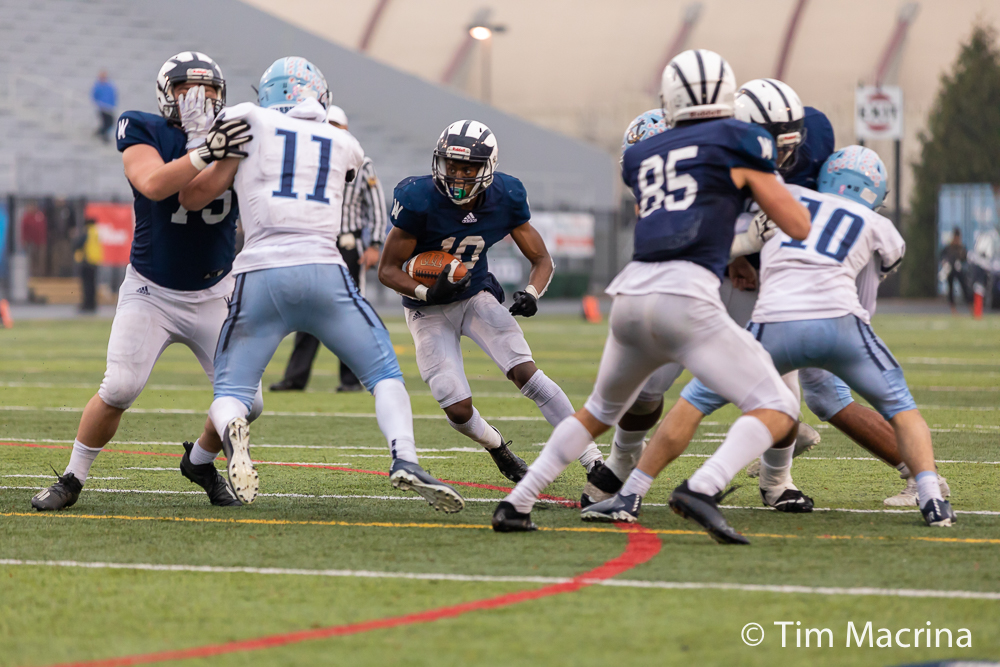
MikeDragoSports: PIAA is moving its football championships to Cumberland Valley this year. Are you OK with those games being played at a high school rather a stadium with a little more cachet?
Bohannon: I’m very happy with it, because Cumberland Valley is not your normal high school field, it’s pretty impressive. It’s like a college atmosphere. (Athletic director) Mike Craig is one of the best in the business. He knows how to get things done. He has a great staff. They’re super-supportive. They are really into athletics. They’ve dumped a lot of money into their facilities; they have to be the best in the state.
MikeDragoSports: The facilities may be great — they’ll certainly be better than antiquated Hersheypark Stadium — but it doesn’t have the same prestige as Hershey or Heinz Field (now Acrisure Stadium) in Pittsburgh, where the WPIAL plays most of its football championships.
Bohannon: I realize that. (But) I’ve been at a thousand district games (at Hershey and it’s so big) it looks like there’s nobody in the stands. Maybe it will not be a good thing, but right now I think it’s a good thing.
MikeDragoSports: Penn State placed a bid to host the PIAA Championships but was rejected because the university was asking for too up-front much money. Can you see the games ending up there at some point? Beaver Stadium would certainly add prestige to the event.
Bohannon: It would be cool as a player coming out of that tunnel, but again, that’s 100,000 seats for what, a thousand people? I enjoyed when the basketball championships were at Penn State but the attendance wasn’t real good; people weren’t going to drive that distance. Now, with live-streaming and (games broadcast) on TV, everybody (figures) I can stay home and watch it.

MikeDragoSports: It appears PIAA is moving toward a shot clock for basketball. Does that happen in the next several years?
Bohannon: I think it’s inevitable. I don’t think it’ll happen in the next two or three years, but in 10 years it’ll happen. As an administrator (it’s concerning because) you have another person that you’re going to have to train at the (scoring) table and it can be (difficult). My son (Braden) plays at Lebanon Valley College, and every game is stopped four to five times to reset the shot clock, and it’s annoying. I’m not a big fan of it.
MikeDragoSports: PIAA recently addressed the Name, Image and Likeness issue, which was enacted by the NCAA last year. How concerned are you about people offering 16- and 17-year high school athletes money to pitch their products?
Bohannon: It’s only going to affect a few (people). It’s going to affect a Lonnie Walker, Micah Parsons . . . it might affect (current Bishop McDevitt quarterback) Stone Saunders . . . and of course (Nick) Singleton, it would’ve affected him. You’re looking at very, very few kids. You have to educate parents and you have to educate kids (about it), because let’s face it: Companies will take advantage of kids and parents.

MikeDragoSports: Earlier this year Vertical Academy — a school, it seems, that was created just to showcase basketball talent — came to Reading to play Reading High. The sports landscape has changed dramatically in recent years with the rise of AAU programs and out-of–season sporting activities gaining prominence. How concerned are you that we’re headed towards the ‘European Model,’ where club sports have replaced school sports?
Bohannon: We’ve got to keep education-based athletics alive; it’s a great thing. Our coaches are teaching life-long lessons, integrity, and those sort of things. And that’s what’s important. That’s what (the kids) will remember. Very, very, very few kids are going to make a living playing sports. But, as you know, every parent is thinking: ‘How am I going to get a free education for my child?’ Let’s face it: You’ve got to be really, really good to be a professional athlete or to get a Division I (scholarship). And people are just throwing tons of money (to pay for camps, clinics and private instruction). Put your money in a college fund, don’t put it in AAU.
MikeDragoSports: If you were King of PIAA sports for one day and could change anything, what would it be?
Bohannon: Two things: Home-schooled students would not be able to play and charter schools would not be permitted to have (teams).
Now, the model (some parents follow) is: I’m going to home-school my kid (but allow him or her to play on the local high school team). He can have another coach. He can train (on his own). Do 3-4 hours (of school work) on-line. They don’t have to be in school on time. They don’t have any sick days. They play by a totally different set of rules than a kid who’s in school every day, and I think it’s totally unfair.
If my students are sick at school, they’re sent home; they can’t play that night. The home-school kid is never going to (face) that. If my student is tardy for school, he misses the first quarter (of that night’s game), or he’s not playing. That doesn’t happen to (the home-school) kid. They have a huge advantage; they’re not on the same playing field. If you want to home-school your kid, then just play . . . for your home.
MikeDragoSports: What’s your issue with charter schools?
Bohannon: Charter schools shouldn’t be permitted to have athletic teams. A charter school, technically, is a public school. Your taxpayers are paying (to field) both teams. I could say I’m going to start Myerstown Charter High School. Have seven boys; take all the basketball players. And we’re going to play at Single A. But (PIAA allows) all those kids to go back and play football, run track and cross country (at their home district school). If you’re going to go to Myerstown Charter, fine, but at the end of the day you should play sports at Elco.