Kyle Conrad remembered as a warrior, friend, coach, role model, father figure

He was with them for just a short time but Kyle Conrad made an impression on his Gov. Miffflin basketball players that will stay with them their whole lives.
“He always had a passion and drive in him and (taught you) to go hard at everything,” said Mustangs senior guard Gerrell McNeil.
“(He reminded you) not to take anything for granted,” said Matt Gehris, a point guard who played for Conrad from 2017-21, “to live every day to the best you can because you never know when something is gonna happen.”
Conrad continued to coach and shape the Mustangs throughout a prolonged battle against esophageal cancer that eventually took his life at age 39 earlier this week.
Throughout three rounds of chemotherapy and radiation treatments over the last three years Conrad continued to coach and teach life lessons. He refused to give in to the pain or the fatigue, or to miss practices or games. He always put others before himself.
“I thought he was a warrior for doing what he did,” said Mason Woolwine, a senior forward last season.
Conrad was known for his intensity as a player at Gov. Mifflin and Elizabethtown College and passed that along to his players.
“He’s a fighter,” said McNeil. “He was going his hardest every day.”
Earlier this month Conrad opted to stop cancer treatments; he succumbed early Monday, roughly a week after returning home from the hospital.
His players, teammates, coaching colleagues and all who interacted with him on and off the court were devastated by the news.
“(Monday) was very hard, hearing that,” McNeil said.
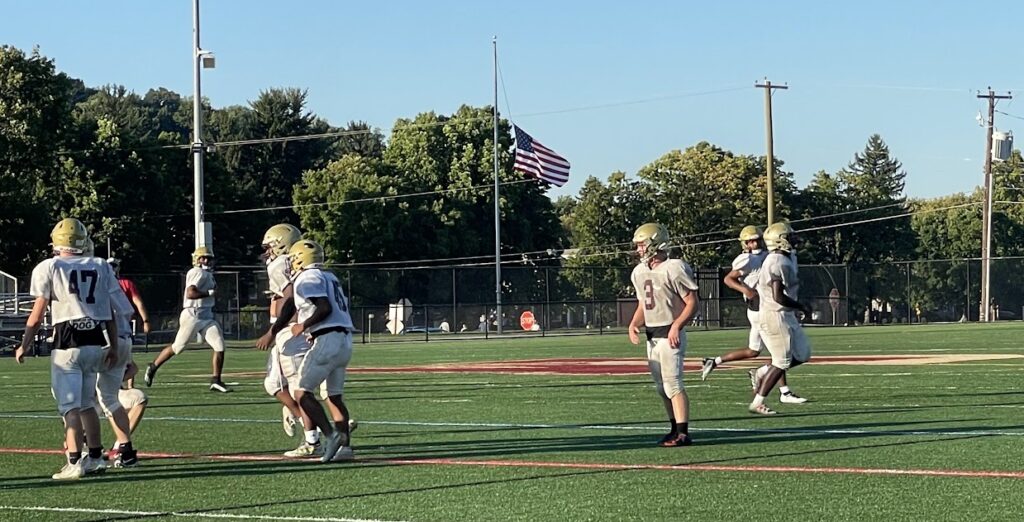
Tuesday afternoon the flag above Mifflin’s turf practice field flew at half-mast in honor of Conrad. His players were struggling to deal with the reality that he won’t be there in a few months when they walk into the gym to begin a new basketball season.
“It’s gonna be real tough,” said senior guard Delsin McNeil. “We’ll have him watching over us, and we’re gonna go all-out all the time (for him). He loved every single one of us, JVs and varsity, everyone. He checked up on everyone; if they were hurt, he texted them to check on them. He was a good guy.”
Conrad never entertained the thought of not coaching because of his illness. His contact with the game and his players buoyed him, he said.
“Coaching invigorates me, and gives me energy and purpose,” he said earlier this year in an interview with MikeDragoSports.com. “As long as I feel well enough to do it, I’m gonna do it. Just because I have an illness, I don’t feel that should mean you stop doing things you enjoy or stop living life.”
That display of courage inspired his players.
“It was rough seeing him like that, losing all that weight,” Gehris said. “The one thing I really respected about him is that he never missed a game. There were probably times where he was not feeling his best and he was right there on that bench, there for us.
“He was a fighter. (We knew) the chances were pretty slim that he was going to beat it, but all of us thought that if there was somebody that was gonna beat that three times it was gonna be him.”
Conrad was a fighter on the court who inspired teammates. He was a 1,000-point scorer for the Mustangs, leading them to a share of first place in Division I of the Berks Conference his senior year, 2000-01.
“He was a role model and exemplied what you wanted in an athlete,” said Mifflin football coach Jeff Lang, Conrad’s science teacher.

He went on to play at Elizabethtown where he scored over 1,100 points, was a two-time all-conference selection and one of the best shooters — at the foul line and from beyond the arc — in program history. He helped the Blue Jays win three straight conference championships and reach the NCAA Division III championship game in 2002.
He brought that game out at Mifflin practices occasionally when he wanted make a point or challenge his players.
“When he brought his green Nikes to practice you knew you were gonna have a bad day,” Gehris recalled. “He’s a great shooter, and he would come in on our best defender and just light him up.”
Conrad was more than a role model or a taskmaster who constantly pushed his players to be their best. He was a father figure.
“Some of the guys didn’t really have that growing up,” Gehris said. “That’s one of the things that made him so special; he was more than a coach. He always asked you what was going on at home. How’s your life? Do you need help getting a job? Do you need help getting into college? He was there for us whenever we needed him.”
Conrad was first diagnosed with esophageal cancer in March 2019, shortly after his first season as Mustangs head coach. He went through rounds of chemotherapy and radiation. In August he underwent surgery to have a cancerous mass removed. Not long after he was back at practice.
As the months passed Conrad thought he had beaten cancer. For months upon months, as regular scans came back clean, he thought, maybe just maybe, he was home free.
“Everything looked good,” he said. “It was almost two years of smooth sailing. I felt like it was behind us. In the back of your mind you never quite know.”
Late in the 2020-21 season he began to feel abdominal pain. A CT scan that March 2021 revealed the cancer had returned.
He continued to take immunotherapy infusions and chemotherapy pills throughout the 2021-22 season. Shortly after the season ended a CT scan revealed the cancer was spreading to other parts of his body.
Some seven months after coaching his last high school game — a 54-51 win over Exeter — he perished.
As he neared the end of his life Conrad reminded his players to be sure to always tell family members that they are loved. Time, he understood, can be preciously short.
“That’s hitting me now,” Woolwine said.