



In transfer portal era, top high school recruits are playing a different game

2025 Berks football coverage presented by
Utilities Employees Credit Union

Matt Bauer has coached more than a dozen Division I football players during 16 seasons as head football coach at Exeter.
He proudly watches each signing day as one of his star pupils – Taylor Bertolet (Texas A&M), Christian Menet (Michigan State), Michal Menet (Penn State), JR Strauss (Villanova), Anthony Caccese (Delaware), Joey Schlaffer (Penn State), or Logan Wegman (Navy) – committed to a Division I program.
He thought he had another sure-fire recruit this season in two-time All-State pick Jayden Zandier, who rushed for over 2,000 yards and scored 34 touchdowns.
The anticipated wave of offers never came for the Eagles’ record-setting tailback, not because he didn’t produce on the field but in large part because of the wildly changing college football recruiting landscape.
With the NCAA transfer portal in full swing over the last few years it has become increasingly difficult for high schools seniors to receive the kind of scholarship offers they once did.
“The big Power (Four) Schools, they’re not taking a (high school) kid and developing him, unless he’s a blue chip (prospect),” Wilson coach Doug Dahms said of teams from the Big 10, SEC, ACC or Big 12. “They’re just gonna wait and pull ’em off the portal.”
Major college coaches, under the gun to win and win big every season, know they can change the fortunes of their program much more quickly by bringing in established players from the transfer portal rather than 18-year-olds from high school who could take several years to develop.
Take a look at Notre Dame: Would the Fighting Irish have been playing for a National Championship had quarterback Riley Leonard, who played two seasons at Duke, not entered the portal and landed in South Bend?
Leonard, like thousands of other players across the nation, took roster spots that just a few years ago would have been pegged for top high school seniors.
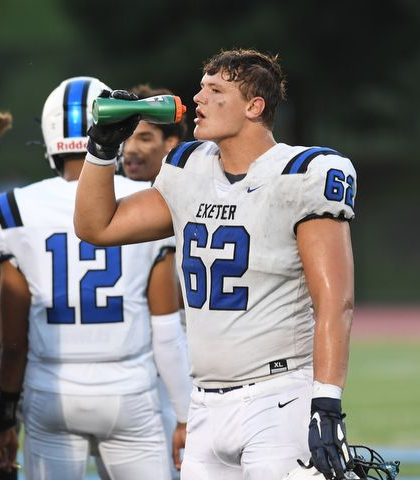
(Brad Drey/Purdon Photo)
In the new landscape of college sports many high school players have seen their dreams of signing to play at the highest level tempered; they’ve had to accept offers from smaller schools and play in conferences at lower levels.
“Every coach from Division II on up is going to look at the portal first to fill their immediate needs,” Bauer said. “I have a hard time with that, but I understand it.”
Missouri was one of several major college programs that leapt at the chance to bring in quarterback Beau Pribula when he opted to leave Penn State. After playing in the Nittany Lions’ system for three years they knew the Central York grad would be miles ahead and adapt faster to their system than a quarterback coming out of high school.
That’s what high school prospects now face.
“It’s been very difficult for high schoolers in this transfer portal world we’re living in right now,” said Adam Friedman, Rankings Director & National Transfer Portal Analyst at Rivals.com. “They’ve had to alter their outlook on their commitments, really.”
Zandier is one of them. He fully expected that dozens of Division I offers would land at his feet, just as they did a year earlier for his brother Zack, a tight end who committed to play at Coastal Carolina.
Five to 10 years ago dozens of schools from what’s now called the Group of 5 – composed of smaller conferences such as the Sun Belt, Mountain West, and Conference USA – would’ve been beating a path to Reiffton. Not this year.
“It’s shocking and upsetting to me, because of the caliber of player he is,” Bauer said of Jayden Zandier, who has committed to play at West Chester of the Division II Pennsylvania Conference. “I just can’t believe no one (at the Division I level) is taking a chance on him. I scratch my head at that.”
Most years six, eight or more Berks football players will sign to play at the Division I level. On the eve of Wednesday’s national signing day just four have committed to Division I schools, none at Power 4 Conferences: Wegman, Twin Valley’s Aris Drake (Navy), Reading High’s Keyshawn Efese (Monmouth), and Fleetwood’s Tristin McFarland (Long Island University).

That number is not about to change.
It’s not that it’s a down season in Berks football – anything but. It’s that the recruiting climate has changed. All-State players such as Evan Myers and Carter Faubel of Twin Valley and Zandier will have to prove themselves at lower levels, then enter the portal and transfer should they hope to play at the Division I level.
That’s what Max Hurleman did. The former All-State defensive back wasn’t on the radar of Power 4 programs coming out of Wyomissing. He played at Colgate in the Patriot League for four seasons, established a solid resume, then walked on at Notre Dame last summer. He ended up playing a key special teams role and finished his college career with games in the Cotton Bowl, Orange Bowl, and in the College Football Playoff championship game.
Berks Class of 2025 college commitments
That appears to be the new model for many.
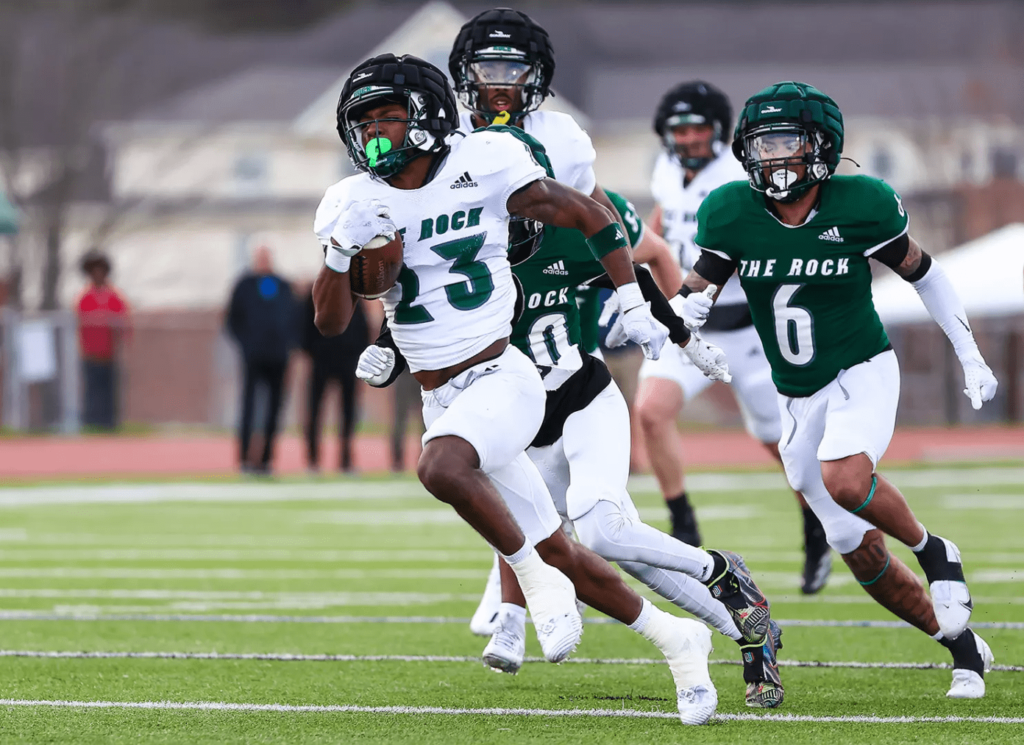
Josiah Jordan, an All-State pick at Berks Catholic, played his freshman season at Wilkes University, a Division III school which plays in the Landmark Conference. After earning Landmark Conference Rookie of the Year in 2023 he transferred to Division II Slippery Rock. If he finds success at that level he could find a spot on a Division I roster.
It’s not an ideal model but it is the new reality.
“Essentially, that’s how they have to look at it,” said Friedman. “Every kid (playing in high school) thinks they’re going to sign with an SEC or a Big 10 school, but a lot of (those) teams have changed their recruiting outlook.”
“We’re not recruiting the way we used to,” North Texas coach Eric Morris told ESPN.com. “I think now, every year you’re building a new team. There’s a new premium in college football.”
“Instead of bringing in 15 (high school) kids, you might bring in seven or eight and get the rest out of the portal,” said Berks Catholic line coach Jasen Esposito, a vice president at GoBigRecruiting.com who has deep ties in the college recruiting world.
Most coaches at the upper levels of college football, Friedman said, would prefer to pull the majority of their players directly from high school and keep them in their program for four to five years.
“That way it’s easier to create culture, to bond (as a team) if everyone stays there,” Friedman said. “You can cohesiveness that way.”
It doesn’t always work out that way. If high schools recruits don’t pan out a coach may have little choice but to turn to the portal for a quick fix.
The transfer portal was put in place to offer student-athletes the chance to find the best fit if their initial choice doesn’t work out. Friedman said that’s how prospects coming out of high school need to look at it; they need to use the system so that it works for them.
“The initial commitment is not as permanent as it used to be,” he said, “but these players can benefit from the flexibility. They can go somewhere where they’re going to see the field. They can go to a smaller school and prove that they’re one of the best players in their conference, and they can transfer up.”