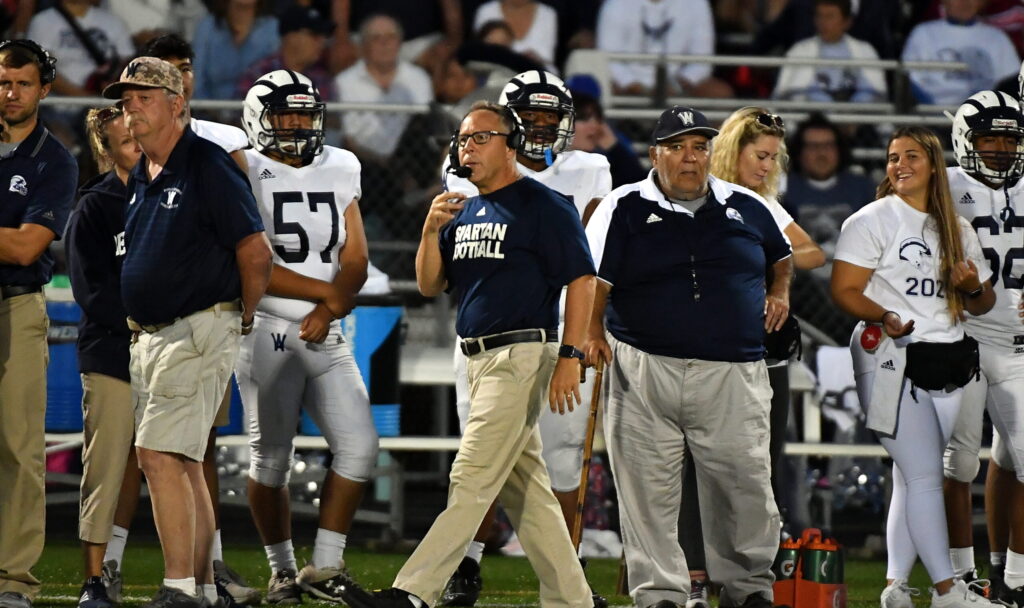
Berks football community thrown for a loss with passing of Al Silveri
2024 Berks football coverage
presented by UECU

Al Silveri could be as demanding of his players as any coach ever was on a football field, but the same kids he chided and harangued for missing assignments or not hustling hung on every word he had to say.
They would gravitate to him after practice, listening for hours upon end as he lectured about blocking skills, toughness, how to succeed in the classroom, and in life.
“He could be really tough on the kids,” said Wyomissing head coach Bob Wolfrum of his long-time assistant coach and friend, “but they knew that he loved them. So they would take it.
“I learned you can be as tough as you need to be with a kid as long as you made sure (he) knew you cared about him. The kids appreciated that with Al.”
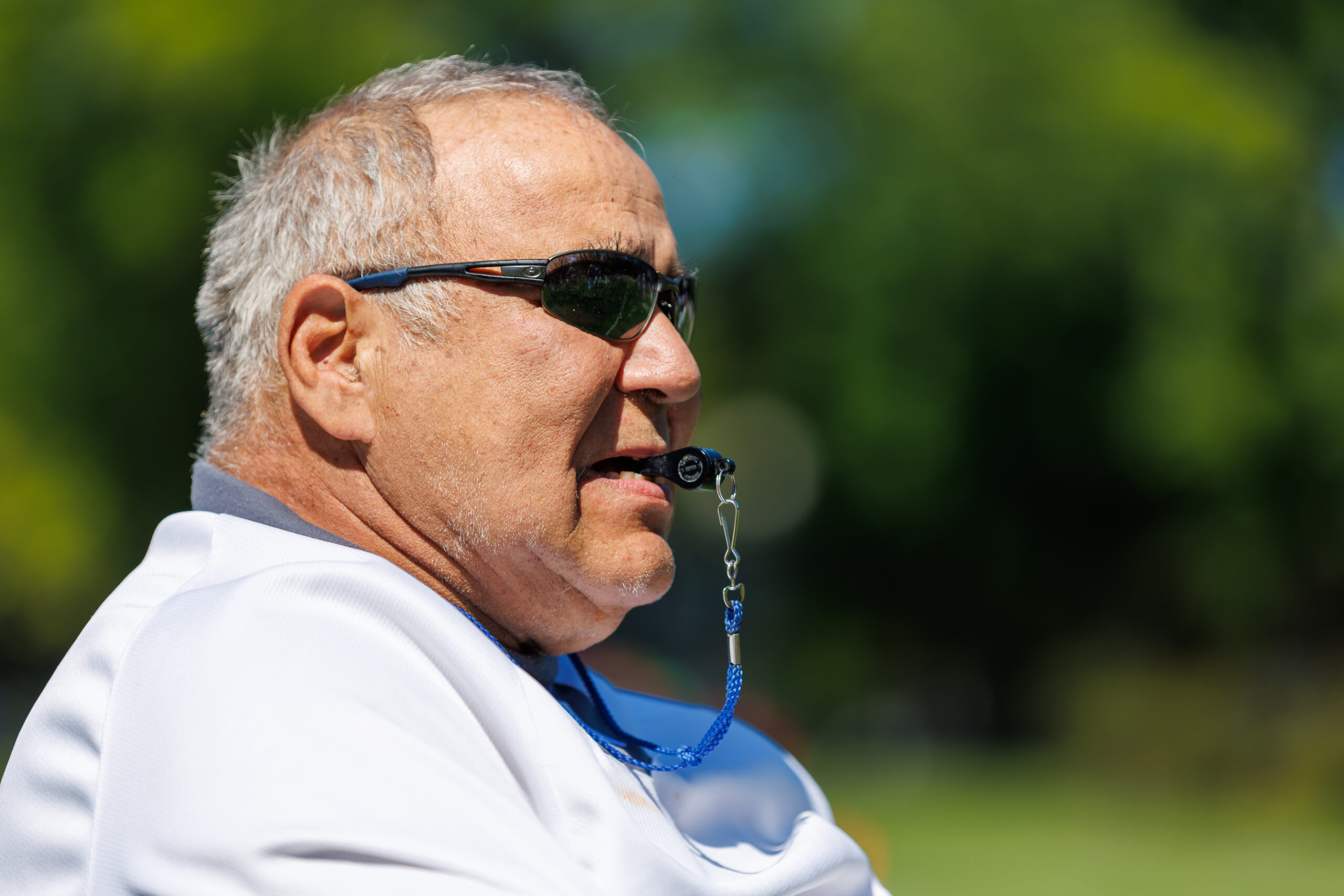
Silveri, who spent 54 years molding young football players and young minds, died late Monday. He was 76.
He was one of the most revered and beloved coaches in Berks football history and he impacted hundreds upon hundreds of lives, both in the classroom, where he was considered an excellent teacher, and on the football field.
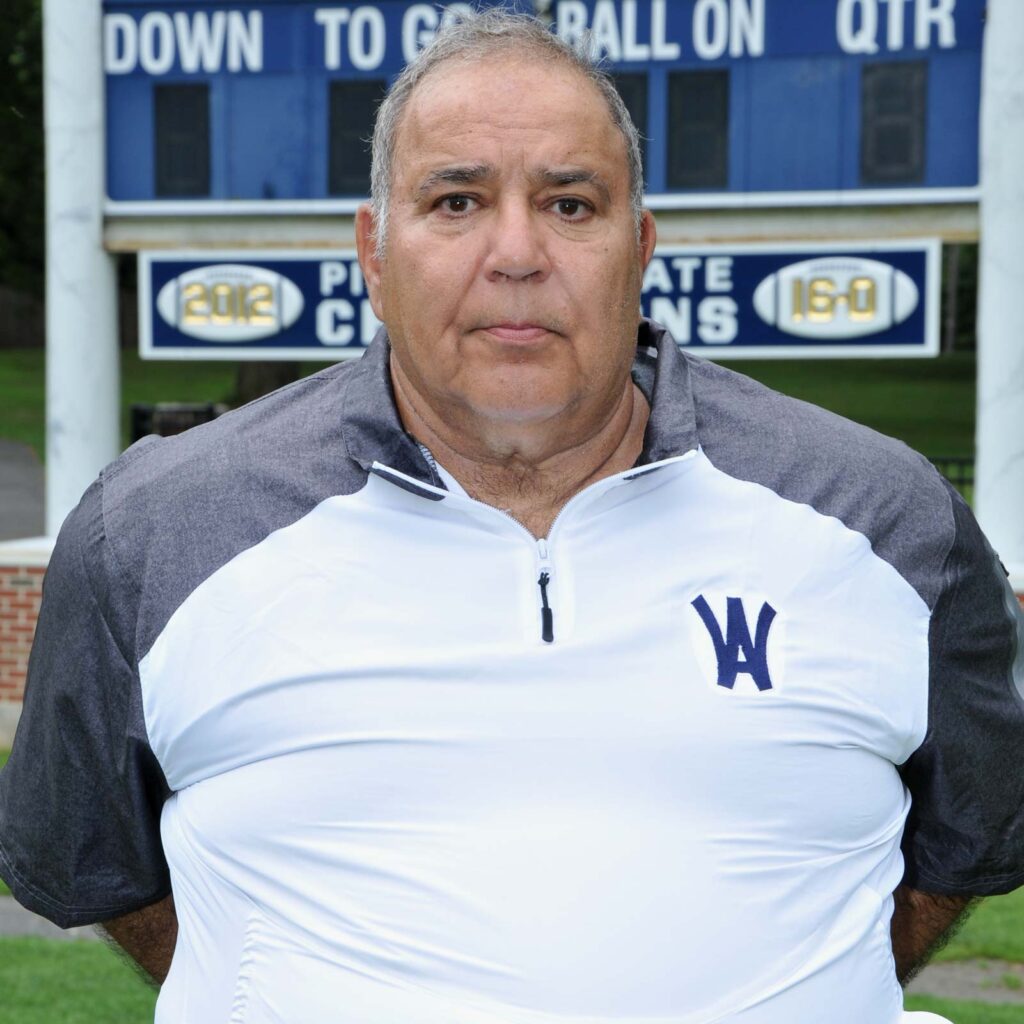
He coached at Wyomissing for 30 seasons, most recently in 2023, over two stints; at Conrad Weiser for 22 years, including 15 as head coach; and at Muncy for two seasons.
He was on the sideline for 400 wins, coached 15 league champions and was on the Spartans’ staff in 2012 when they became the first Berks football team to win a PIAA championship.
Silveri’s impact was more wide-ranging than just the points on the scoreboard and the games in the win column.
He was a much broader individual than that; off the field he was known for his intellect, his sense of humor and his dedication to the sport and the kids who played it.
“The wins and losses were important,” said Conrad Weiser head coach Alan Moyer, who played for Silveri at Weiser, “but the thing I always took from him and (former Weiser coach) Ferdie (Kuczala) was the importance of developing good, solid young men and having an influence on young men. That’s resonated with me.”
Fittingly, Silveri was the lone member of the inaugural class of the Berks County Football Coaches Association Hall of Fame in 2003. He was revered by his contemporaries.
Silveri was a long-time president of the BCFCA, and served as president emeritus in recent years. Many will tell you he kept that organization functioning; he helped the organization produce senior All-Star games, postseason awards banquets, a Hall of Fame and a scholarship fund.
“He was a guy who would do anything for you,” Wolfrum said. “When he came back to Wyo he would do all of the little jobs that nobody else wanted to do. He didn’t need any credit. He was a leader by being a servant.”
Silveri, a fullback and guard at Mahanoy, was hired as a teacher at Wyomissing in 1970 and joined the staff of Roger Evans, Wyomissing’s first head coach. He later was an assistant for Jack Paris for five seasons. He moved on to Weiser in 1979, where he coached for three seasons under Kuczala, including the Scouts’ first unbeaten team and Inter-County League championship in 1981.

He went on to Muncy, where he was a head coach for the first time in 1983, then returned to Weiser as an assistant to Joe Heilman in 1984.
He succeeded the late Heilman as head coach in 1988 and eventually took the Scouts to I-C championships in 1994 and 1996. The latter team went unbeaten through the league and set a program record that still stands, winning 11 games.
Silveri was an old-school coach to the bone and his football philosophy remained simple, and unchanged over the years.
“Teams that have been successful stress blocking and tackling,” Silveri told the Reading Eagle in 2020, when he ignored potential health risks imposed by COVID-19 and continued to coach. “If you have the greatest X’s and O’s in the world but can’t block and tackle you’re not successful.
“And you’ve got to take care of the special teams. People neglect that. (Washington Redskins coach) George Allen used to say it’s a third of the game. We put a lot time into it, at every practice. At (Conrad) Weiser we did the same, and that won some games for us.”
Silveri’s Weiser teams were often successful in the special teams and knocked out bigger schools in close games because of their command of the kicking game.
“He left no stone unturned,” said Moyer, an assistant on Silveri’s staff and eventually his successor. “He was meticulous in game-planning. His willingness to prepare (helped us succeed). That’s where I learned the work ethic (of a coach) and what it took to run a successful program.”
Silveri expected that same commitment from his players.
“Play the game to the best of your ability and let the chips fall where they may,” he would tell them. “Don’t come off the field with regrets. Be committed. Do your best. (And) enjoy the moment. For some of you this will be the only football you know.”