



Wilson grad Chris Finch brings NBA’s best record to Philly homecoming
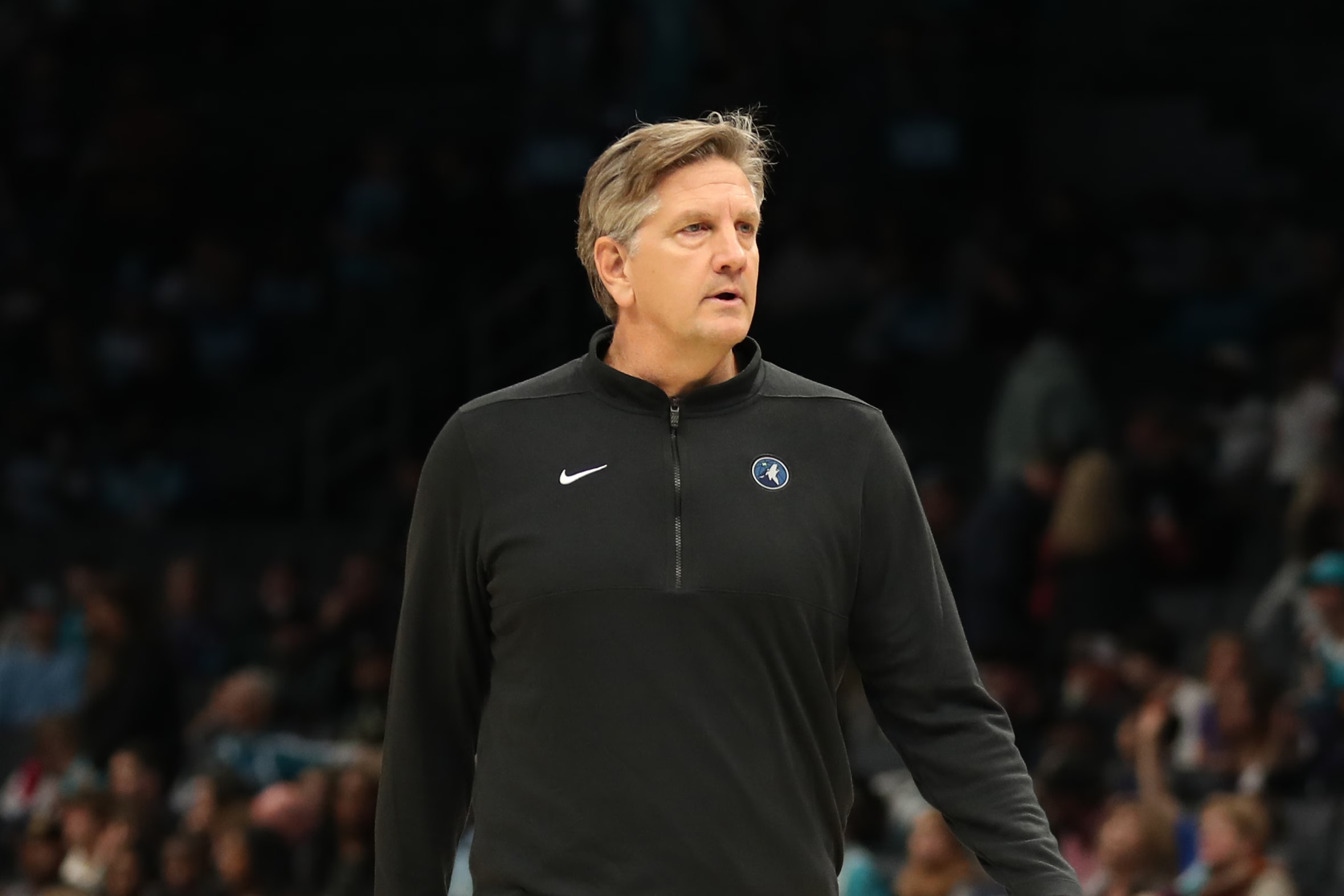
(Editor’s note: Philadelphia defeated Minnesota 127-113 Wednesday night.)
By Gordon Jones — MikeDragoSports.com special correspondent
Versatile as Chris Finch was as a player at Franklin & Marshall College three decades ago – and he remains among the school’s career leaders in various categories – his calling card was always defense. He was the head of a suffocating snake, one that slithered all the way to the NCAA Division III championship game his junior year (1990-91), still the program’s high-water mark.
But as a professional coach over the intervening years – whether in Europe, in the minor leagues stateside, as an NBA assistant or now as the head coach of the Minnesota Timberwolves – the Wilson grad has come to be known for his offensive acumen.
He doesn’t quibble about labels, about whether he’s an offensive guy or a defensive guy.
“I’m a coach at heart,” he said during a recent phone interview.
Period. End of story.
But understand that in some ways he has gotten back to his roots this season, which has seen the T-Wolves sprint to the best record in the NBA at 20-5, and the best start in the team’s tattered history. Finch earned Coach of the Month for November because of that, the first Minnesota boss since 2009 to be so honored.
The Wolves, 42-40 and first-round playoff losers in 2022-23, have greater continuity this season, after Finch and Co. were forced to incorporate preseason acquisition Rudy Gobert and midseason acquisition Mike Conley into the mix last year. They were also forced to go long stretches without three-time All-Star forward Karl-Anthony Towns because of injury.
Everything is falling into place this season, which in addition has seen the continuing ascent of fourth-year guard Anthony Edwards. But the big difference has been defense. The Wolves, who visit Philadelphia tonight, lead the league not only in efficiency at that end of the floor, but also opponents’ field-goal percentage – 43.4.
A big part of that is the return to form of Gobert. A three-time Defensive Player of the Year during his nine seasons in Utah, the Frenchman (known, wonderfully, as “The Stifle Tower”) averaged just 1.4 blocks a game in his first season in Minnesota. This year he’s at 2.4, which is in line with his career norm and indicative of first-rate rim protection.
“Rudy,” Finch said, “has taken his defensive impact to a whole other level – probably the best of his career, which is kind of saying something, given how great he’s been.”
Towns and backup big Naz Reid have adapted well to the varying challenges presented by opposing power forwards, whether that be a shooter, slasher or post guy. And the team as a whole boasts a number of capable defenders, all of whom have bought into what Finch and his assistants are emphasizing at that end of the court.
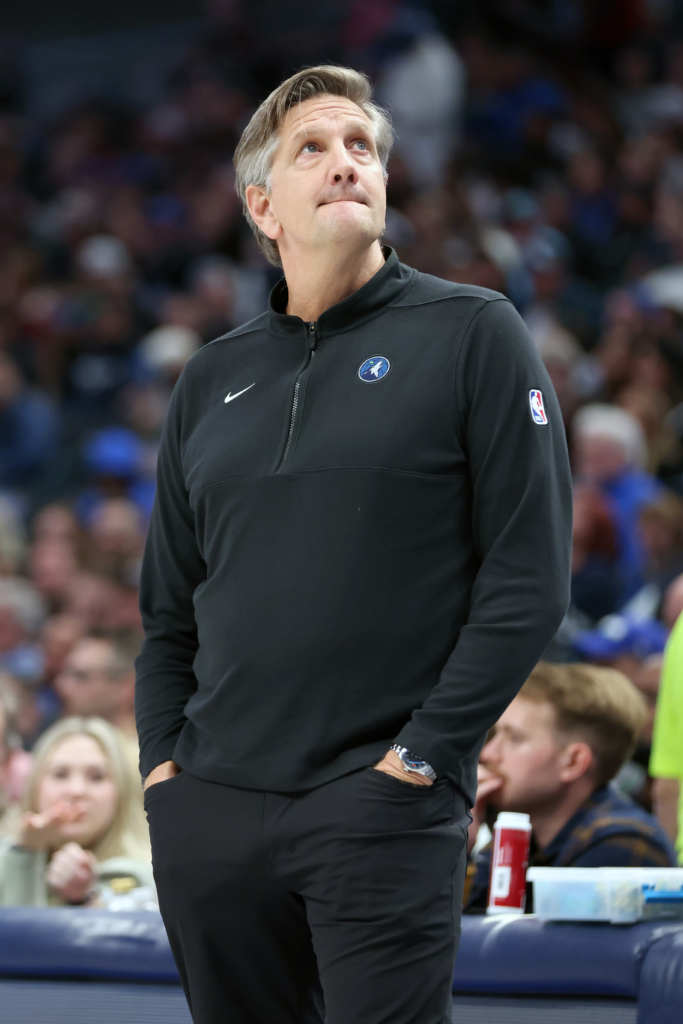
“Playing defense is the connective tissue that brings teams together,” he said. “It’s a commitment, it’s a sacrifice, it’s a communication. Those things all matter when you’re trying to build chemistry.”
Again, he would know as well as anyone. At F&M he routinely locked down opponents’ biggest scorers. He said back then that he was motivated by fear – “fear of failure,” he said.
Still is, actually.
“There’s no doubt,” he said. “That’s why the wins just don’t feel that great.”
Finch has always been driven to success and experienced it at an early age. He led Wilson in scoring as a sophomore, was an All-Berks pick as a junior and senior and became the program’s first 1,000-point scorer. His program record of 1,391 points remained in place for 33 years, until Stevie Mitchell came along.
Scoring records aside, he was all about winning at Wilson: His junior team won it first 27 games in 1986-87 before running into the legendary Billy Owens of Carlisle. That team ended up with 29 wins, still a program record.
Finch, 54, came to be known as an offensive guy during his 12 years coaching overseas, in England, Germany and Belgium. Unable to attract a standout big man because of budgetary limits, he would assemble smallish teams that played fast, spread the floor and shot a ton of 3-pointers.
“These were the teams that we could afford, and we gave teams fits because we played that way,” he said. “I didn’t know advanced basketball analytics at that time. I just thought our personnel did (that style) best.”
That attracted the attention of the Houston Rockets, and forward-thinking general manager Daryl Morey (now with the 76ers). Morey explained to Finch why his approach worked as well as it did, and that the Rockets were looking to play that way as well. It is why, in 2009, Finch landed as the head coach of Houston’s G-League affiliate, the Rio Grande Valley Vipers, and why he would become a Rockets’ assistant two years later.
He spent five years in that role, then assumed similar positions in Denver and New Orleans before taking a post under Nick Nurse (now the Sixers’ coach) in Toronto in 2020.
The two of them were well-acquainted, having coached against each other in England and with each other on the British national team (Finch was the head man, Nurse an assistant), notably in the 2012 Olympics in London.
When the Rockets wooed Finch, Nurse was among those who encouraged him to take the G-League job. When Finch was promoted to the Houston staff, Nurse succeeded him as the RGV coach.
“He’s the best coach I’ve ever worked with,” Finch said. “He’s so creative. He checks all the boxes.”
Nurse is a particularly adept defensive strategist, and during the half-season the two of them spent together in Toronto, Finch received what he called “a master class” in D from his old rival/colleague.
“It was fun working with him,” Finch said, “and just getting those defensive juices flowing again.”
It served him well when he was hired to replace Ryan Saunders as Minnesota’s coach in February 2021. The T-Wolves limped home at 23-49 that year – 16-25 under Finch – but improved to 46-36 in 2021-22 and made just the 10th playoff appearance since the team’s founding in 1989.
The Wolves returned to the postseason last year, and this season have even loftier goals. Edwards, who averages 24 points a game, is a budding star. Towns and Gobert are consistent double-double guys. And Conley, a point guard who at age 36 is in his 17th season, “might be one of the most underrated players . . . in the modern era,” according to Finch.
And there’s still room for improvement.
“We have another gear in us offensively,” Finch said.
They’re no doubt going to need it, given how competitive the West is. But for now they identify as a defensive team. That’s a familiar look to a guy who once earned his bones at that end of the floor, and figures to serve them well over the long haul.