



Mamas, don’t let your babies grow up to be . . . sportswriters
(This story was originally published March 1.)
With apologies to Willie Nelson:
Mamas don’t let your babies grow up to be sportswriters
Don’t let ’em face deadlines or angry coaches and fans
Let ’em be doctors and lawyers and such
‘Cause they’ll never be home weekends or nights
Always away from someone they love
Them that don’t know them won’t like them
And them that do sometimes won’t know how to take them
My first newspaper job came when I was 5 or 6 years old.
It was my task each morning to walk to the end of our long driveway, retrieve the Baltimore Sun, and place it on the kitchen table where my father could peruse it and grumble.
I was not interested in (nor could I comprehend) the headlines of the day: Vietnam, Lyndon Johnson, Civil Rights marches or losing the space race to the Soviets.
What caught my eye was a cartoon, a fixture on the bottom right-hand side of Page 1 of the Baltimore Orioles mascot. If he was happy, smiling or jubilant it meant the Orioles had won the night before. If he was sullen, slumped over, or distraught it meant they lost.
I didn’t realize it at the time but that was the introduction to my life in journalism.
When the Orioles swept the highly favored Dodgers in the 1966 World Series my dad, my mom — hell, everyone — was ecstatic. I didn’t understand much about baseball at that point but I was mesmerized by the post-game celebration as the players – grown men — poured champagne and beer over each other in the clubhouse.
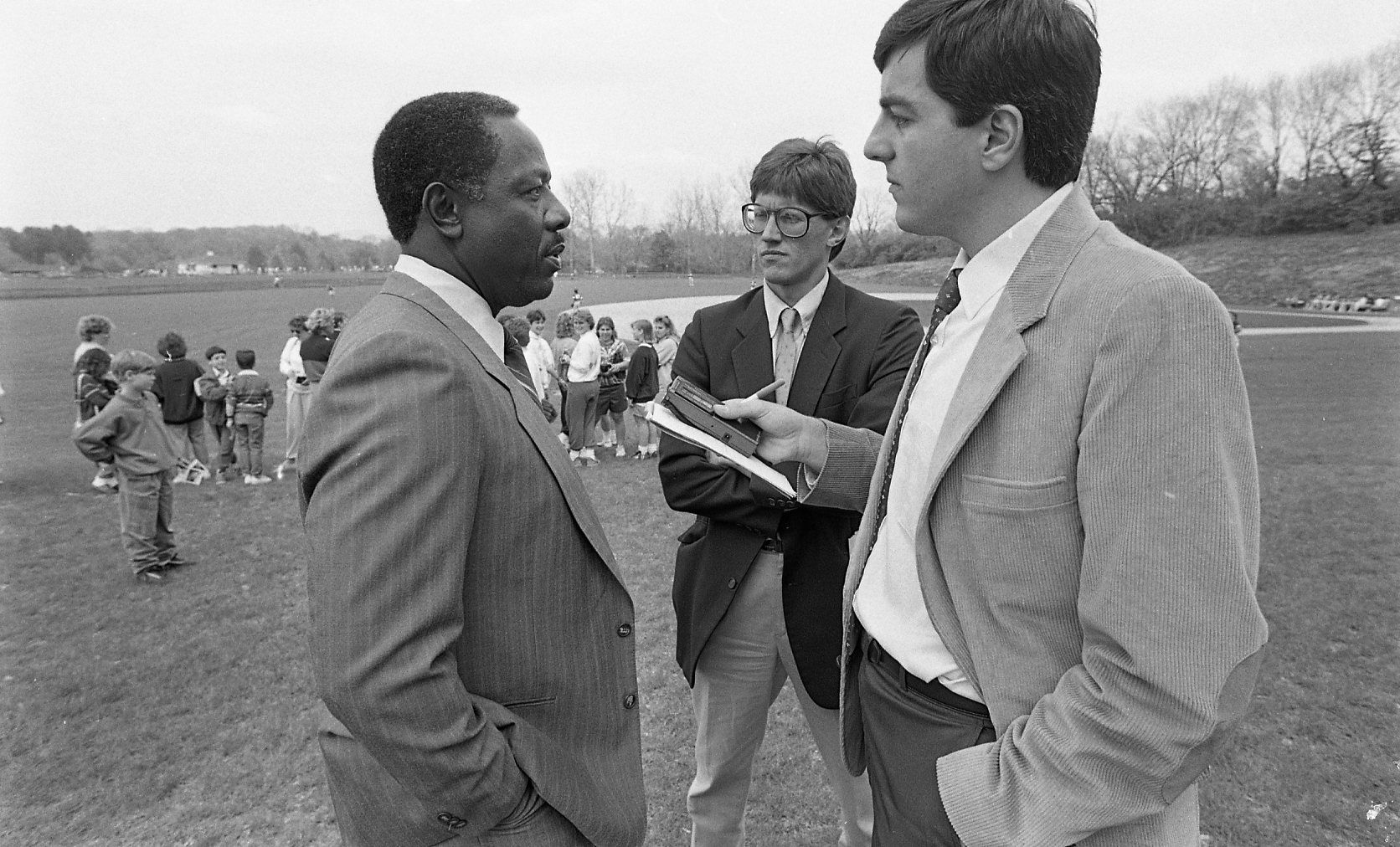
There were sportswriters interviewing them, getting soaked in Natty Boh, too. That, my wide-eyed young self said, is what I want to do; that’s where I want to be.
I didn’t know how to get there, or how difficult it would be once I made it, but 60 years later I have few regrets about the journey. It has been a uniquely fascinating trip, filled with ups and downs, ungodly stress, impossible situations, mistakes, good times and professional fulfilment. It is who I am.
My mother told me that if I found a job I loved it wouldn’t seem like work. She didn’t mention the deadlines, the late nights, the travel, weekend assignments, or missing my own kids’ games so I could be there to write about yours – but she was right. Moms usually are.
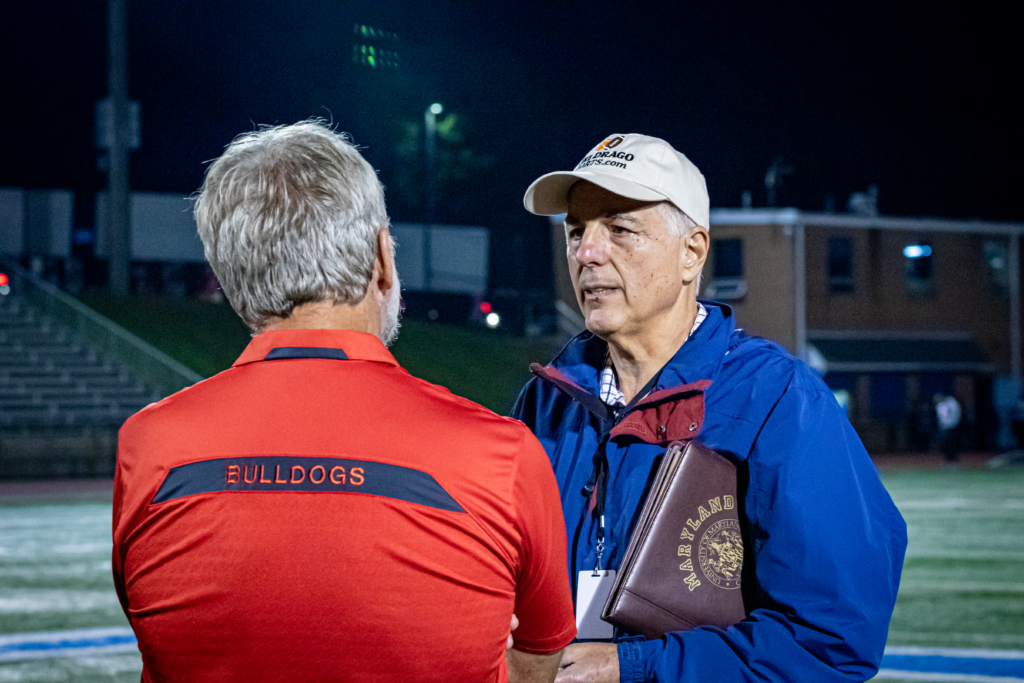
Being a sportswriter at a daily newspaper is like falling into a rose bush – you experience a face-first encounter with both the thorns and the flowers. We mostly remember the flowers. And the people we meet along with way. And telling their stories. Everyone, I came to realize early in my journey, has a story to tell. It became my job to find it and tell it.
“Sportswriting,” a friend in the business recently told me, “is a chance to witness someone’s greatest moments and capture them for posterity. Our articles hang on walls for a reason.”
“It sounds simple,” another colleague said, “but never is: Getting it right, and saying it right. When you do both, it’s an unbelievable high: You’ve created something, dammit, and there’s a great deal of satisfaction in that. You’ve conjured something up out of the ether. Not everybody can do that.”
One of the alluring things about being a sportswriter is that it offers a front-row seat, not only for the games but for the stories behind them. Before, and after, you can (usually) talk to the players and coaches, find out what they’re thinking, why they took that shot, and how if felt to have made it – or missed.
I feared Gerry Slemmer, a 6-5, 260-pound linemen when he played at Arizona State, would tackle me to the ground that night I asked him about the fake punt that went awry and sparked Reading’s win over Wilson. I lived to tell about it.
I survived Steve Swisher, too. Shortly before he was dismissed as Reading Phillies manager for his uneven temperament I popped my head into his office after a loss. “What the f*** do you want!” he bellowed. A good story, that’s all; I got one.
Nothing was ever more exhilarating than chasing the big story.
One of the biggest was the recruitment of Reading basketball star Donyell Marshall. In the days before the Internet and social media sportswriters were the sole proprietors of such stories.
Donyell’s final college choices were Maryland and U-Conn. Every sportswriter in Huskies-rabid New England was chasing that story. I got it first because Billy Hahn – Maryland’s top assistant, who had become a close source – stormed out of his house upset, his wife told me when I called on the eve of Donyell’s announcement. I figured that could mean only one thing and broke the story.
It’s become harder and harder over the years to tell these stories. The Internet, the changes it provoked in the immediacy of news and to the financial structure of media, essentially doomed newspapers. Good sportswriting went with it.
My buddy Mike Gross says it best: Being a sportswriter in post-millennial America is like being a blacksmith. Once respected and needed . . . now, a bit of a novelty act.
Those of us who have made a career of it are grateful for the experience but also saddened by what has happened to a once-proud profession.
Earlier this month the Washington Post sports section, long a bastion of excellence in sports reporting – Thomas Boswell, John Feinstein, Tony Kornheiser, Sally Jenkins, Michael Wilbon – disappeared before our eyes. Billionaire owner Jeff Bezos, who blew $50 million on his wedding last summer, decided good journalism wasn’t worth as much as a weekend at San Giorgio Maggiore island.
That was a dagger for all us.
People in Berks County know this story all too well. Media News Group, with an annual revenue of $600 to $800 million per year, bought the Reading Eagle on the cheap a few years ago, gutted the staff and essentially eliminated local sports coverage. There were 20 full-time people in the sports department when I was hired there in 1983; there is now one.
That’s a common story across America. Lancasteronline.com, which had one of the last fully-staffed sports departments in Pennsylvania and was able to provide wall-to-wall coverage of high school events, recently suffered the same fate; two of its four full-time sportswriters were let go.
“The decline of the newspaper industry has been tough to watch unfold,” a friend in the business told me. “Growing up, landing a job at a daily newspaper and being a sportswriter was a great job. Sportswriters were idolized and high school athletes beamed when you covered their games.
“Technology advancements eliminated some of those jobs but the switch from family-run papers to corporate shams killed the industry. It’s disheartening to see what it has become.”