Are we getting close to separate PIAA playoffs for public and private schools?

2025 Berks football coverage presented by
Utilities Employees Credit Union

For decades, coaches and administrators at Pennsylvania public high schools have complained about the unfair playing field they face when competing against parochial, private and charter schools.
These “non-boundary” schools, as they’re lumped together, have an advantage because they can openly recruit or entice top student-athletes to their schools.
The lopsided list of state championships won by that minority of schools – which represent about one-fourth of all PIAA members – is proof that the playing field is not level.
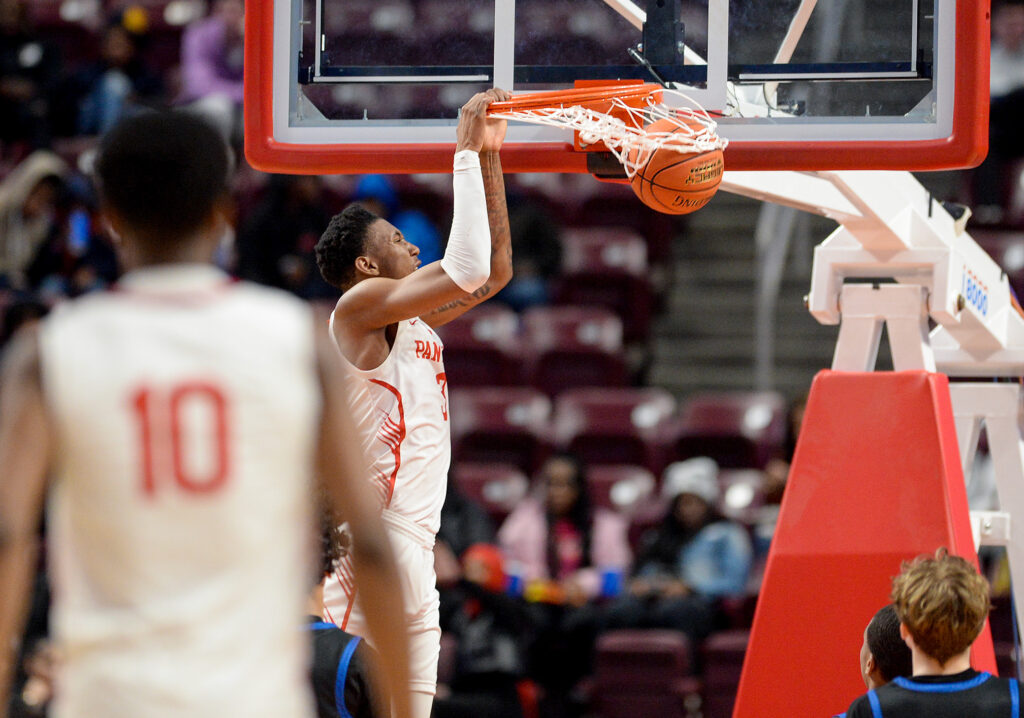
During the PIAA boys basketball tournament earlier this year each of the six champions and 10 of the 12 finalists were from “non-boundary” schools.
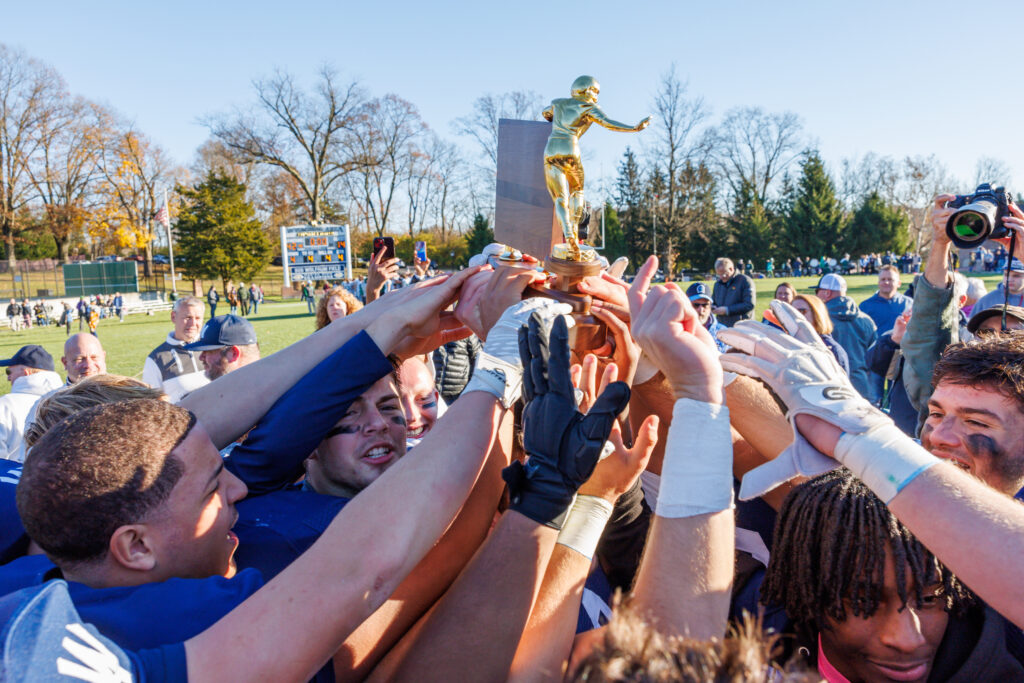
The results were similar in football last fall when four of the six champions, including those in the three largest classifications – St. Joseph’s Prep, Bishop McDevitt, and Bonner-Prendergast – were Catholic schools.
That kind of imbalance has been standard fare for years.
Public schools became so enraged by the disparity in 2018 that it appeared we were on the verge of a civil war. Public school administrators gathered and openly talked about leaving the PIAA, which governs high school sports in this state.
PIAA officials got the message; they quickly tightened their transfer rules and enacted the Competition Formula, a method of forcing perennial championship programs to play in higher classifications.
Those measures have been a band-aid, of sorts, but the wounds of this public vs. private battle remain unhealed.
Some believe the only true solution is separate playoffs for public and private schools, as other states, such as Maryland, New Jersey, and Texas, have implemented.
Scott Conklin, a Centre County Democrat and member of the Pennsylvania state house, believes that, too.
For years he’s been introducing bills to give the PIAA the freedom to conduct separate playoffs.
For years, he’s been rebuffed – until now.
Last week, for the first time, Conklin cleared a political hurdle and got his measure – House Bill 41 – through committee. The Pennsylvania House Intergovernmental Affairs and Operations Committee voted by a 20-6 margin to send the bill onto the House floor for consideration.
That may not sound like much but it’s a first positive movement towards potentially solving a problem that has plagued Pennsylvania scholastic sports for decades.
“That is a huge step,” Conklin said gleefully. “This has never happened before.”
Conklin is confident that if brought to the floor the bill will make it all the way to the desk of Gov. Josh Shapiro.
“This is one of those bills, if it makes it onto the House floor, it passes,” Conklin said. “If it makes it to the Senate, it passes.”
Then what?
Conklin’s hope is that the PIAA Board of Directors will be free to take the next step and institute separate playoffs for public schools and private schools.
His hope is that schools such as Exeter, which made it to the Class 5A state championship in basketball a couple seasons ago, will never again have to run into a powerhouse such as Imhotep Charter or face a player the likes of Justin Edwards, who played one season at Kentucky, then went straight to the NBA.
Southern Columbia and Aliquippa have built football dynasties in Pennsylvania, to be sure, but boundary schools such as that are few and far between. Not so among non-boundary schools: Neumann-Goretti, Roman Catholic, St. Joseph’s Prep, and Imhotep Charter have put together seemingly unbeatable basketball and football teams in recent years.
Conkin’s bill made it through committee because unlike his other attempts this measure would not force the PIAA to institute separate playoffs, it would only open the door for that.
The question remains: If this bill becomes law, would the PIAA take that next, highly controversial step?
For years, PIAA officials have fallen back on Act 219, a state law passed in 1972 that authorized private schools to compete against public schools in the postseason. They have said they legally can’t amend their playoff system.
How would the PIAA respond if Conklin’s bill becomes law and it has the choice?
There’s no evidence to indicate the state’s governing body would take the next step and create separate playoffs. Then again, after all that’s gone on, it would seem compelled to. It’s something that nearly three-fourths of its membership would favor.
There would still be obstacles. The Catholic Conference, which has a powerful lobby in Harrisburg, would oppose the move, possibly threatening legal action. That’s been the biggest roadblock to the PIAA making such a move.
We’re still a long way from that; despite Conklin’s confidence, there’s no assurance House Bill 41 becomes law.
This long-simmering battle is only just heating up.