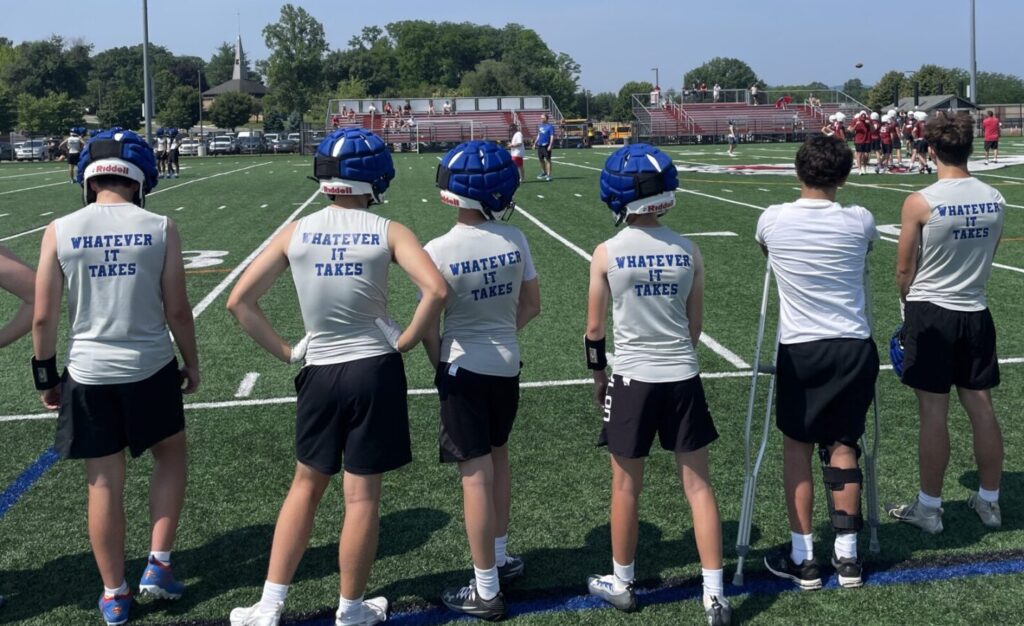
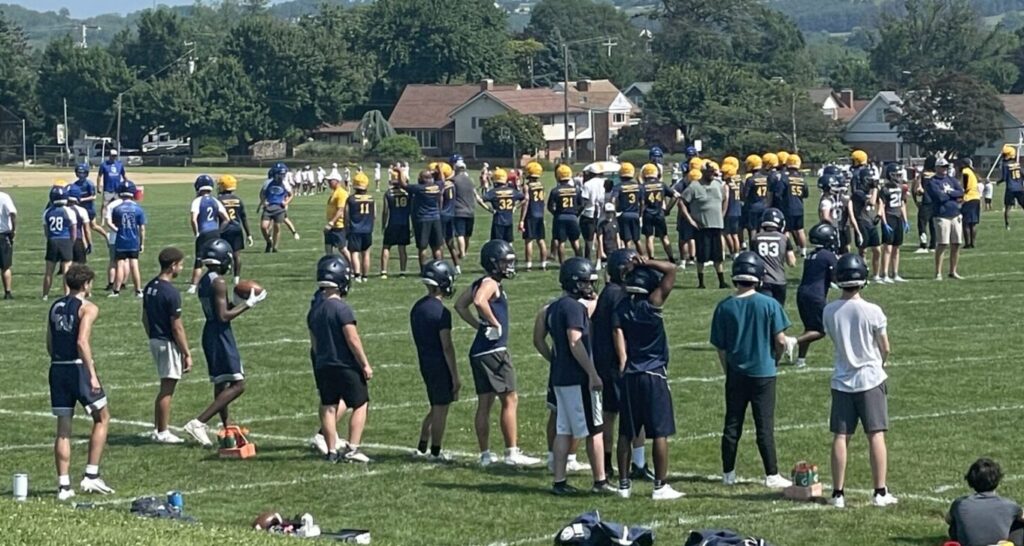
7-on-7 competitions a key tool as Berks teams prep for football season

2025 Berks football coverage presented by
Utilities Employees Credit Union

After winning 18 games and pair of section championships the past two seasons Schuylkill Valley is starting over.
The Panthers no longer have All-State quarterback Logan Nawrocki or his favorite target, All-State tight end Luke Spotts, to build their offense around. They need to find new weapons.
“We’re still figuring out guys’ roles,” said Schuylkill Valley wide receivers coach Steve Heck. “Last year at this time we knew where all the people were (going to play). Right now, we’re trying to figure out how we’re going to generate explosive plays.”
The Panthers went about that Thursday in West Lawn as part of a 16-team field during Wilson’s annual 7-on-7 showcase.
Quarterbacks, receivers, and backs from top programs such as Central York, Cumberland Valley, Manheim Township, and Manheim Central – along with five Berks schools – were spread across five fields working on their passing and receiving skills.
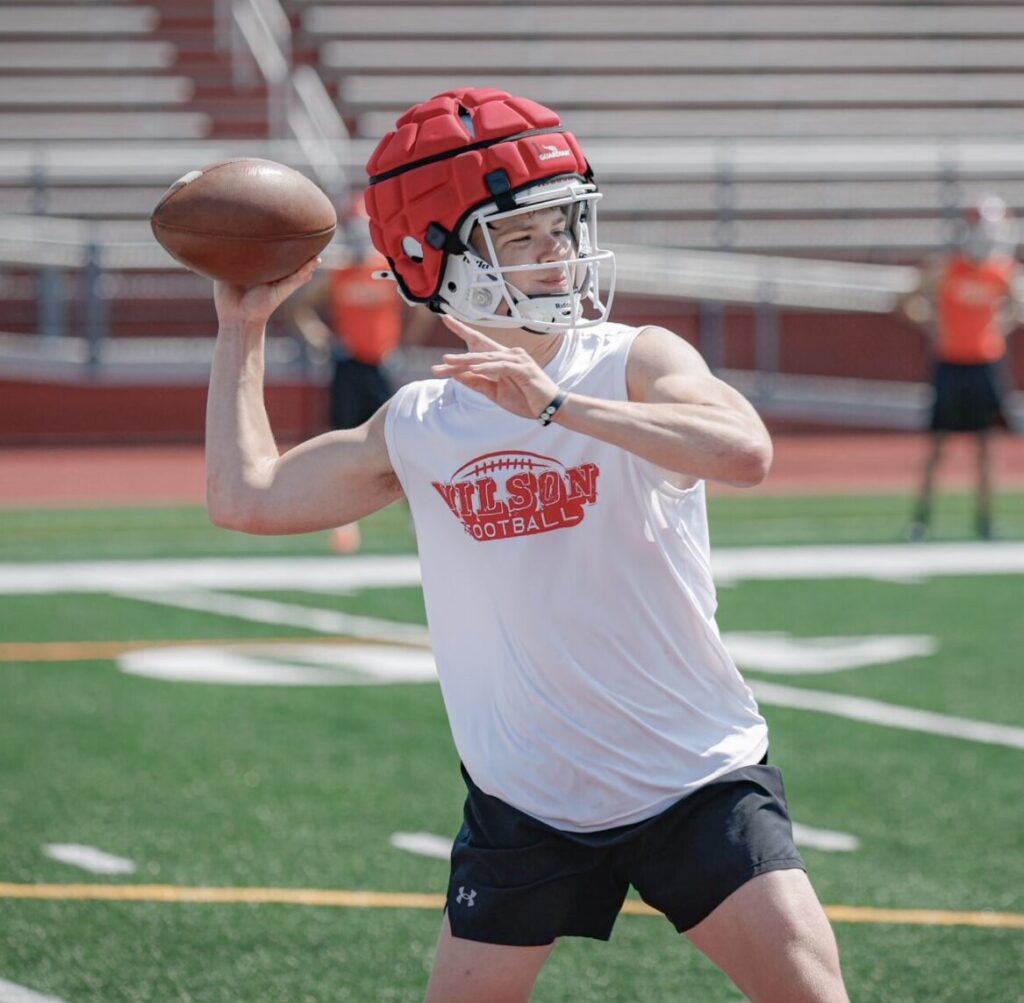
The 7-on-7 format, born in the late 1990’s, gives teams a chance to sharpen their passing-game skills and defensive coverages throughout the spring and summer without pads or the physical contact that can lead to injuries that might sideline a player for weeks.
(The PIAA does not allow contact drills until two weeks prior to the season.)
Coaches use the format to evaluate their players against real competition and to install their offenses long before the start of official practice in August.
Players from Conrad Weiser, Exeter, Muhlenberg, Schuylkill Valley, and Wilson matched skills against players from Boyertown, Cocalico, Pottsville and others during the day-long competition.
‘We’re looking to see who knows what they’re doing,” said Muhlenberg coach Rob Flowers. “We want to make sure we have the right guys in the correct spaces to make sure we can be successful.”
Teams do these same drills during practice sessions throughout the spring and early summer but those can get stale. Running your plays against another team, one trying its best to stop you, adds a competitive element that Owen J. Roberts coach Rich Kolka appreciates.
“When you go against another team it raises the bar a little bit,” said the former Muhlenberg head coach.
“You’re not keeping score,” said Wilson offensive coordinator Jeremy Palm, “but it’s still competitive because nobody wants (to get burned) and see that play (posted) on Twitter.”
The 7-on-7 format wasn’t used when Palm was the Bulldogs’ quarterback in 1996. He would’ve loved to had these kind of drills to sharpen his passing skills and gain a better bond with his receivers.
Wilson quarterbacks Mason Young, a rising senior, and Cole Peterson, a rising junior, alternated behind center during competitions Thursday against Central York, Manheim Central, O.J. Roberts and Cumberland Valley. They got hundreds of reps and the chance to look at defensive coverages, which will help slow the game down for them come Friday nights.
“You’re able to build that confidence in the progression of reads,” said Palm.
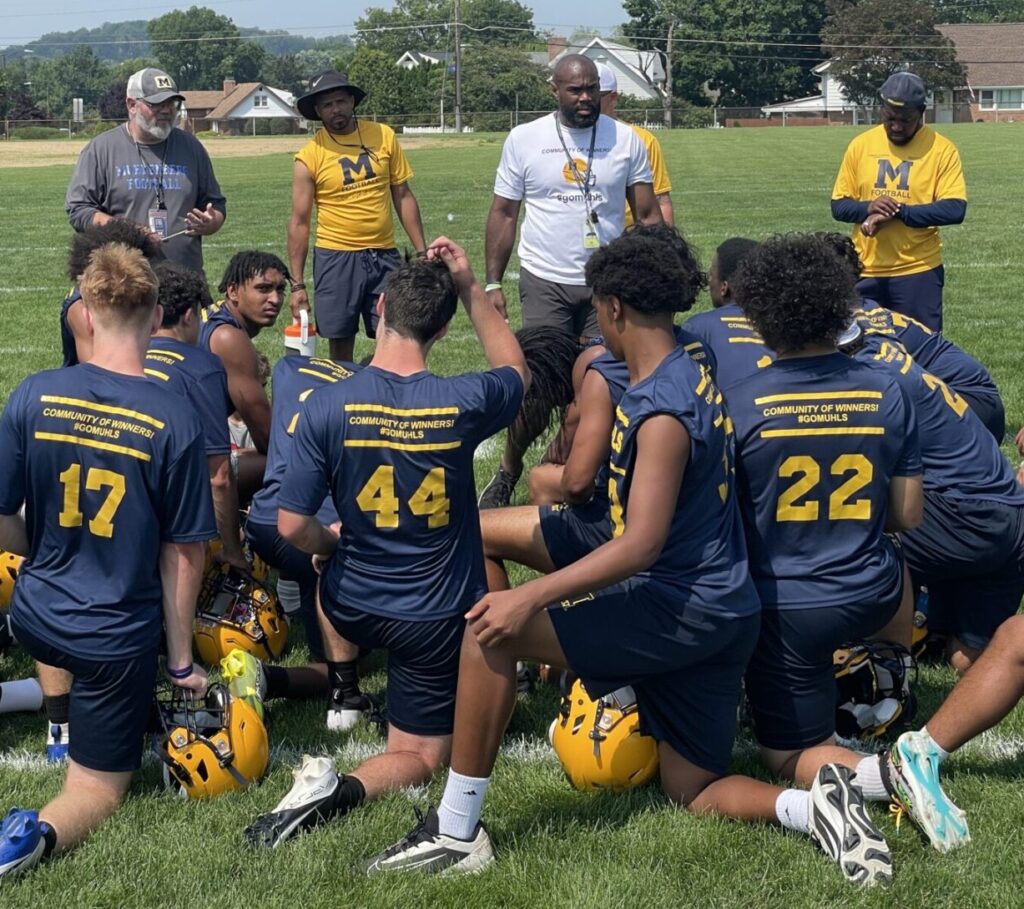
The 7-on-7 concept was brand new when Flowers was a junior quarterback at Muhlenberg; he said it helped him immensely as he prepared for his senior season in 1998.
“(Before the season began) I knew whatever pass concept we were going to run,” he said. “I knew the exact read.”
No doubt, it’s an offensive drill and players on that side of the ball gain more from it than the guys on defense. Still, Exeter coach Matt Bauer said the drills are beneficial for his linebackers, safeties and corners. (Defensive lineman don’t take part in these drills.)
“It puts a lot of pressure on the back seven to step up and understand the coverages and the responsibilities,” he said. “These are filmed, and we can analyze them, see where the holes are.”
Coaches evaluate their players at every stage of the offseason. They watch them work in the weight room during the winter months and constantly measure their strength and speed gains. When they get out on the field for 7-on-7 competitions they’re able to see how well they run in space and how they match up against other top players.
No one’s going to win a starting job in June because of a 7-on-7 drill but a strong performance will plant a seed and might give that player a leg up heading into August contact drills.
“We want to make sure we have the right guys in the correct spaces to make sure we can be successful,” Flowers said.
“(With these drills) you’re getting real-time evaluation on (whether) that’s a good spot for that kid, or that’s the wrong spot for that kid,” Heck said. “This is a great R&D session for us.”
“You can learn a lot, you can grow a lot,” Palm said of the 7-on-7 season. “All the skills position (players) can get much, much better, but as far as winning a job we’ve gotta see what happens when you get punched in the mouth (during live contact drills).”
“It’s great,” Kolka said of 7-on-7 competition, “but it’s not football.”
“Eleven-on-eleven football is totally different,” Palm said. “As soon as that guy (lined up against you) wants to kill you, things change.”